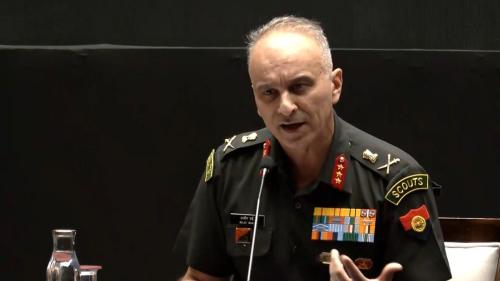
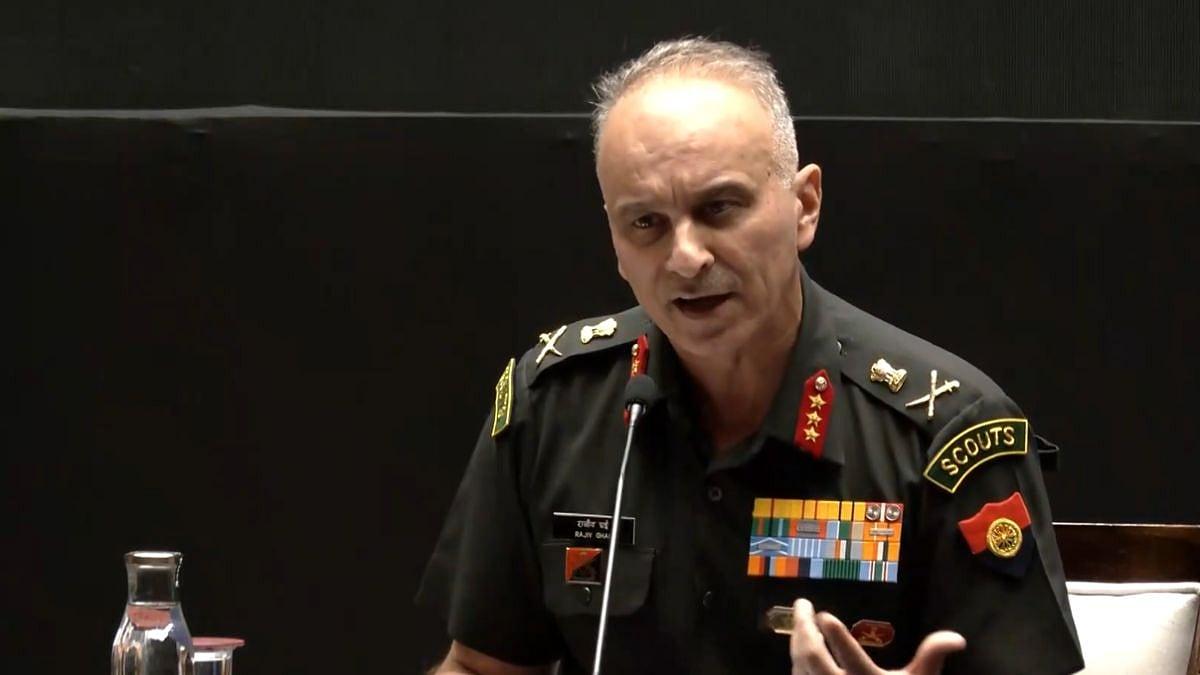
Former Director General of Military Operations Rajiv Ghai on Thursday revealed that Pakistan was forced to seek de-escalation during Operation Sindoor after India carried out what he described as a precise and calibrated military response following the deadly Pahalgam terror attack.
Speaking at an event in Jaipur on the first anniversary of Operation Sindoor, Lt Gen Ghai said India achieved all key objectives of the operation without allowing the conflict to turn into a prolonged war.
He stated that the military campaign fundamentally altered Pakistan’s “risk appetite” and disrupted its command structure, ultimately compelling Islamabad to request an end to hostilities.
According to Ghai, India deliberately designed the operation to deliver a “sharp shock” through precision strikes while maintaining escalation control and avoiding wider regional instability.
Operation Sindoor was launched after the Pahalgam terror attack that killed 26 civilians, triggering one of India’s strongest cross-border anti-terror responses in recent years.
Lt Gen Ghai said the operation highlighted the growing strength of India’s indigenous defence manufacturing capabilities under the Atmanirbhar initiative. He noted that more than 65 percent of the defence equipment used during the operation was manufactured domestically.
He said systems such as the BrahMos missile, Akash air defence platform, advanced surveillance systems, electronic warfare equipment and indigenous ammunition played a decisive role during the mission.
The former DGMO added that locally produced military systems gave India greater operational flexibility, faster supply chain support and the ability to sustain precision strikes effectively.
Ghai also highlighted the extensive coordination between India’s armed forces, intelligence agencies and cyber warfare units during the operation.
He said the mission involved a tri-service military strategy integrating land, air and maritime assets with real-time intelligence sharing and electronic warfare support.
According to him, India conducted nine precision standoff strikes targeting terror infrastructure located in Pakistan-occupied Jammu and Kashmir as well as deep inside Pakistani territory. Of these, seven strikes were carried out by the Indian Army and two by the Indian Air Force.
He said the attacks achieved complete tactical surprise and were executed with minimal collateral damage.
The former military official also praised intelligence agencies for providing accurate targeting inputs while cyber and electronic warfare teams maintained information dominance throughout the operation.
He added that the government simultaneously handled diplomatic engagement, internal security management and public reassurance, creating what he described as a coordinated national response model for future military operations.