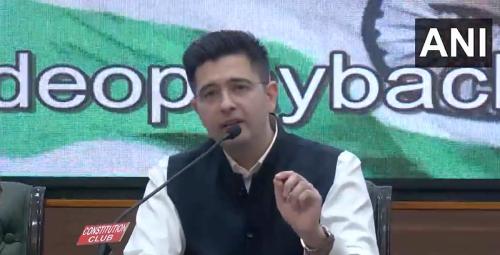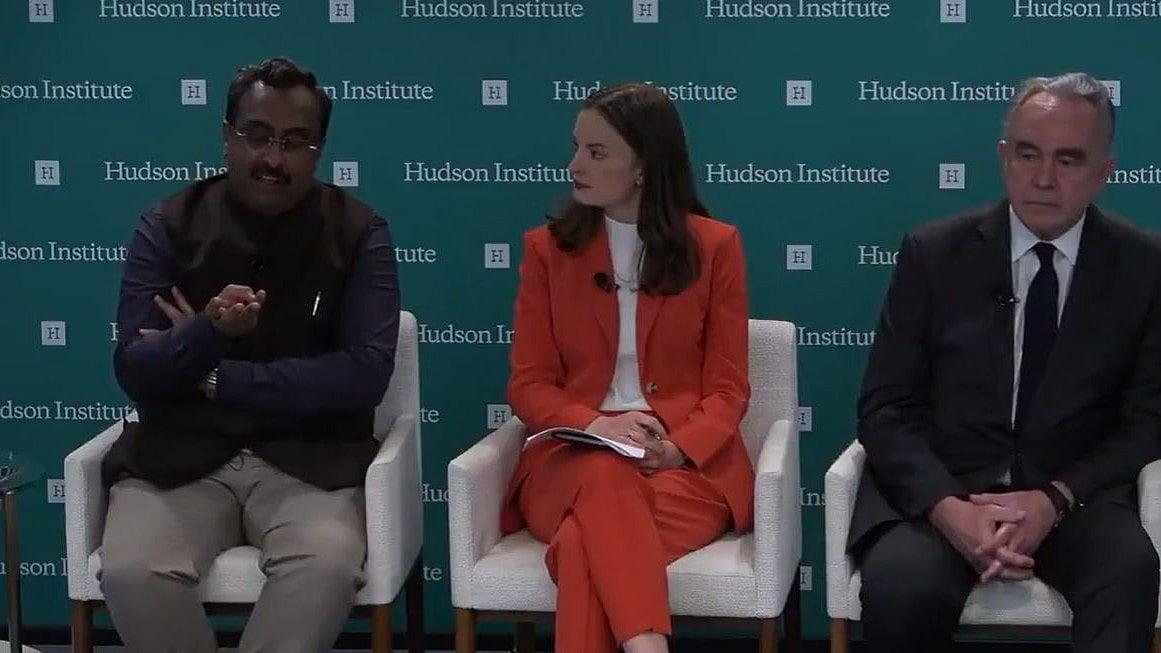
BJP leader Ram Madhav has landed in a political storm after wrongly claiming during an event in the United States that India had stopped buying oil from Russia — a statement that triggered sharp opposition attacks and forced him to issue a public apology.
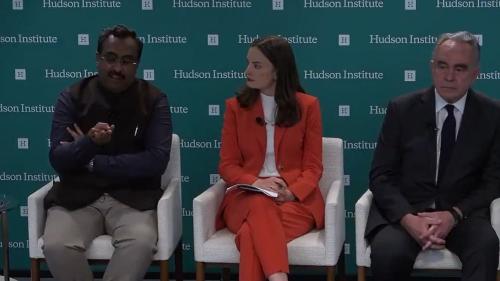
The controversy erupted after Madhav made the remarks during a panel discussion at the Hudson Institute, where he appeared to suggest that India had made major concessions to the United States, including halting Russian oil imports.
During the discussion, Madhav said, “India agreed to stop buying oil from Iran. We agreed to stop buying oil from Russia despite so much criticism from our opposition. India agreed to a 50% tariff without saying too much.”
The statement quickly went viral on social media, with critics accusing the BJP leader of misrepresenting India’s foreign policy position on Russian oil imports.
His comments immediately sparked outrage because India has repeatedly defended its purchase of discounted Russian crude despite pressure from Western nations.
The opposition seized on the statement, accusing the government of compromising national interests under international pressure.
Shama Mohamed, spokesperson of the Indian National Congress, attacked the Modi government after Madhav’s remarks, alleging that Prime Minister Narendra Modi had bowed to pressure from former US President Donald Trump.
The backlash intensified online, with opposition leaders questioning whether the BJP leader had inadvertently revealed a shift in India’s energy policy.
As the criticism mounted, Ram Madhav moved quickly to retract his statement and admit that what he said was factually incorrect.
In a public apology posted on social media, he clarified that India had not agreed to stop importing oil from Russia and had also strongly opposed the 50 per cent tariff measure he referred to during the discussion.
“What I said was wrong. India didn’t agree to stopping import of oil from Russia anytime. Also, it vigorously protested the 50 percent tariff imposition. I was trying to make a limited counterpoint to the other panelist, but it was factually incorrect. My apologies,” Madhav wrote.
The apology may have corrected the record, but the incident has already provided the opposition with ammunition to target the BJP on foreign policy credibility.
The episode has also raised questions about messaging discipline within the ruling party, especially on sensitive issues like India’s ties with Russia and the United States.
Since the Russia-Ukraine conflict began, India has maintained that its oil imports are guided by national interest and energy security, while resisting Western pressure to curb purchases from Moscow.
Any suggestion that India agreed to halt Russian oil imports is politically explosive, given the government’s repeated insistence that its foreign policy decisions remain independent.
Although Madhav has now retracted the claim, the controversy has reignited debate over whether public remarks by senior political figures can undermine the government’s carefully calibrated diplomatic stance.