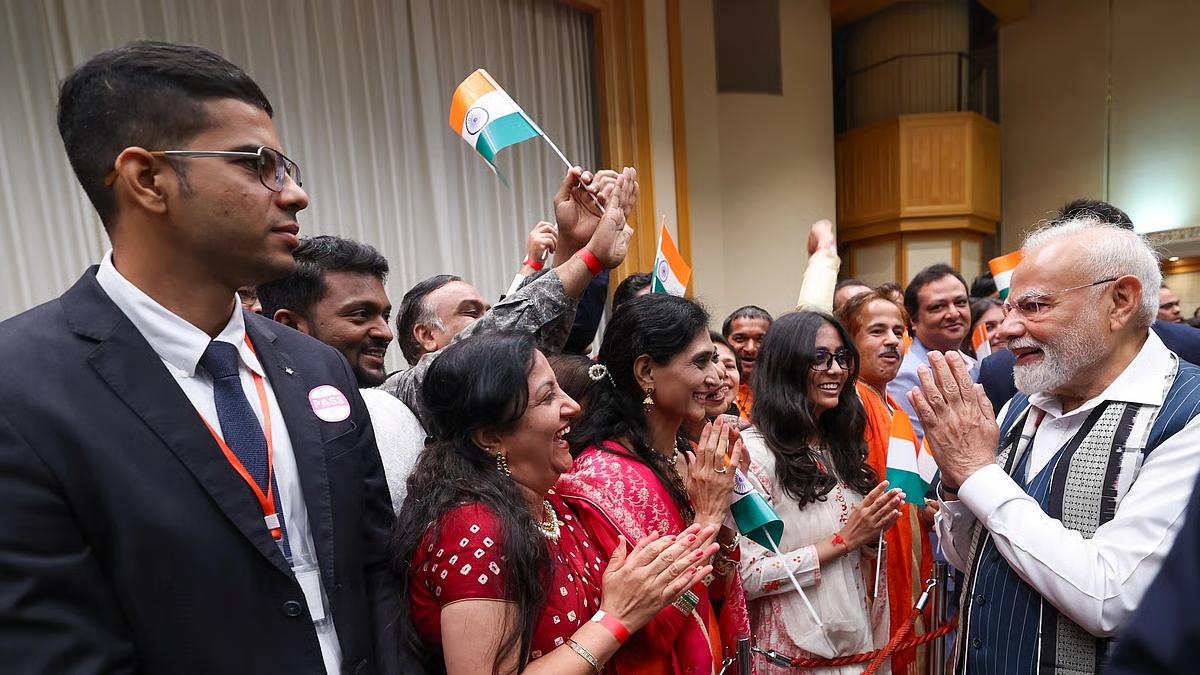
Prime Minister Narendra Modi on Friday began his two-day official visit to Japan, marking his eighth trip to the country since assuming office in 2014. Upon his arrival in Tokyo, he received a rousing welcome from the Indian diaspora, who waved the tricolour and raised slogans in his support.
The visit holds special significance as it includes the 15th India-Japan Annual Summit and a high-level bilateral meeting with Japanese Prime Minister Shigeru Ishiba. The discussions are expected to focus on enhancing cooperation in clean energy, semiconductors, startups, and strengthening global supply chains.
Expressing gratitude for the warm reception, PM Modi took to X (formerly Twitter) and wrote: “Deeply touched by the warmth and affection of the Indian community here in Tokyo. Their commitment to preserving our cultural roots while contributing meaningfully to Japanese society is truly commendable.”
The welcome ceremony also carried a cultural flavour. A Japanese Bharatnatyam dancer expressed delight when the Prime Minister posed for photos with performers, while Japanese women in Rajasthani attire sang a traditional folk song, symbolising India-Japan cultural bonds.
Highlighting the purpose of his visit, PM Modi posted on X: “Landed in Tokyo... I look forward to engaging with PM Ishiba and others during this visit, thus providing an opportunity to deepen existing partnerships and explore new avenues of collaboration.”
On Saturday, August 30, both leaders will travel together by high-speed train to Sendai, where they will visit a state-of-the-art semiconductor facility—a sector seen as vital for future cooperation.
After completing his Japan visit, PM Modi will head to Tianjin, China, to participate in the Shanghai Cooperation Organisation (SCO) Summit on August 31 and September 1.