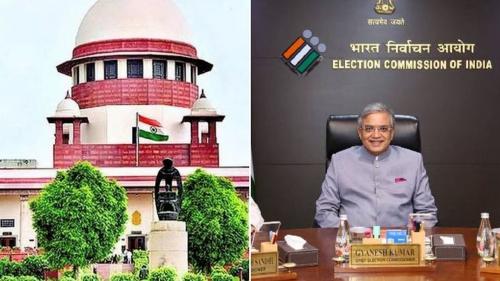

In a historic ruling, the Supreme Court of India on Wednesday permitted passive euthanasia for a 32-year-old man who has remained in an irreversible vegetative state for more than 13 years. The decision marks the first time the court has allowed passive euthanasia under the legal framework established in the Common Cause vs Union of India ruling, which was later updated in 2023.
The order was delivered by a bench comprising Justice J B Pardiwala and Justice K V Viswanathan while hearing a petition filed by the father of Harish Rana. Rana has been in a permanent vegetative condition since a tragic accident in 2013.
According to court records, Harish Rana suffered a devastating fall from the fourth floor of his paying guest accommodation while studying in Chandigarh. The accident caused severe brain injuries, leaving him in a Persistent Vegetative State with 100 percent quadriplegia. Medical reports submitted to the court confirmed that his condition has shown no improvement for more than a decade.
The bench described the case as deeply heartbreaking. Justice Pardiwala noted that Harish was once a bright young man before the accident changed his life completely. The court observed that Rana is currently surviving only through Clinically Administered Nutrition delivered through surgically installed PEG feeding tubes.
Taking into account the medical evidence and the wishes of his family, the court directed that Harish Rana be shifted to the palliative care unit at All India Institute of Medical Sciences. There, doctors will supervise the gradual withdrawal of medical treatment in accordance with established medical and ethical guidelines.
The judges emphasised that the entire process must be carried out with dignity, compassion and strict medical supervision. They also noted that the bench had earlier interacted directly with Rana’s family members to understand their emotional state before making a final decision.
Medical reports prepared by specialists at AIIMS concluded that there was absolutely no chance of recovery. Justice Pardiwala described the report as extremely painful and said the court could not allow the patient to remain trapped in endless suffering. He stated that the time had come for a final decision in the interest of the patient’s dignity.
The court also clarified that Clinically Administered Nutrition qualifies as a form of medical treatment. Therefore, it can legally be withdrawn when both the Primary and Secondary Medical Boards conclude that continuing treatment offers no therapeutic benefit.
In this case, both medical boards and Harish Rana’s parents unanimously agreed that continuing artificial nutrition would only prolong his biological existence without any hope of recovery. Accepting these findings, the court ruled that withdrawing life support would serve the patient’s best interests and uphold the constitutional principle of the right to die with dignity.
Harish Rana has remained completely unconscious for nearly 13 years since the accident. Over time, his condition worsened with severe complications, including bed sores and total dependence on life-sustaining medical support. His parents eventually approached the Supreme Court seeking permission to end what they described as prolonged and unbearable suffering.
By allowing passive euthanasia in this case, the Supreme Court has taken a major step in shaping India’s legal understanding of end-of-life care and the right to die with dignity. The ruling is expected to set an important precedent for similar cases in the future where patients remain in irreversible vegetative states with no hope of recovery.