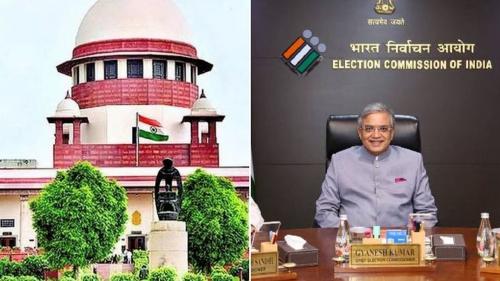

The Supreme Court on Friday, August 8, declined to hear a Public Interest Litigation (PIL) that called for an independent safety audit of Air India in the aftermath of the AI-171 crash in Ahmedabad on June 12, which claimed 241 lives onboard and 19 on the ground.
A bench comprising Justices Surya Kant and Joymalya Bagchi questioned the narrow scope of the petition, asking why only Air India was targeted when broader safety checks should apply to all airlines. The judges cautioned against using a tragic incident to “run down” a specific carrier.
The PIL, filed in July by advocate Narendra Kumar Goswami, himself claiming to be a past victim of an Air India mishap, sought multiple directives, including:
- Appointment of a retired Supreme Court judge-led committee to review Air India’s safety protocols and submit a report within three months.
- A comprehensive fleet safety audit by an ICAO-accredited international agency, with corrective measures implemented within six months.
- A transparent, publicly accessible safety reporting system under the Directorate General of Civil Aviation (DGCA).
- Compensation for crash victims’ families as per the Montreal Convention, 1999, and ex-gratia payments for those affected in the AI-143 safety incident.
The bench advised Goswami to withdraw the PIL and approach the appropriate regulatory authority instead, reiterating that aviation safety is a systemic issue and must be addressed across all operators, not only one airline.
The AI-171 tragedy involved a Boeing 787 Dreamliner en route to London’s Gatwick Airport that crashed shortly after take-off from Sardar Vallabhbhai Patel International Airport, Ahmedabad. Of the 242 passengers and crew, only one person survived. The victims included 181 Indian nationals, 52 UK citizens, and 19 people on the ground. The disaster occurred while Air India was undergoing a major operational revamp under the Tata Group’s ownership.