The 2026 Brihanmumbai Municipal Corporation (BMC) election was widely seen as a do-or-die moment for the Thackeray family. After years of political separation and public sparring, Uddhav Thackeray and Raj Thackeray came together, raising expectations of a strong emotional wave built around Marathi pride and Balasaheb Thackeray’s legacy.
But Mumbai voters delivered a clear and hard message: nostalgia alone does not win elections anymore.
The BJP-led Mahayuti crossed the majority mark and effectively ended the Thackerays’ long dominance over India’s richest civic body. The much-publicised reunion failed to convert symbolism into seats. Here is a deeper look at why the “Thackeray magic” did not work this time.
1. Marathi Votes Were No Longer Under One Roof
For decades, the Shiv Sena controlled the Marathi voter base almost completely. That reality has changed. The 2022 split of the Sena permanently fractured that support.
Eknath Shinde’s faction successfully positioned itself as the inheritor of Balasaheb Thackeray’s ideology, while also projecting itself as a party of governance and execution. As a result, Marathi votes were divided between Sena (UBT), MNS, and the Shinde-led Sena. The Thackeray brothers could unite emotionally, but electorally, the vote had already moved on.
2. Mumbai Chose Roads and Metros Over Rallies and Rhetoric
The Mahayuti campaign spoke the language of projects, timelines, and delivery. From metro lines and coastal roads to redevelopment and infrastructure upgrades, the ruling alliance sold a vision of a “working Mumbai.”
In contrast, the Thackeray brothers leaned heavily on identity politics and emotional appeals. For many urban voters struggling with traffic, housing, and daily commuting, development promises mattered more than legacy politics. The election exposed a growing gap between emotional messaging and urban expectations.
3. An Alliance That Looked United, But Sounded Confused
On paper, the Sena (UBT)–MNS tie-up looked powerful. On the ground, it raised uncomfortable questions. Raj Thackeray’s hardline image has often worried non-Marathi and minority voters, while Uddhav Thackeray has spent recent years projecting a softer, more inclusive approach.
This contradiction created mixed signals. Voters were unsure what the alliance truly stood for beyond opposing the BJP. In a city as diverse as Mumbai, unclear messaging proved costly.
4. Losing Congress Meant Losing Key Vote Banks
The Thackeray brothers’ reunion also came with a political price. The Congress, uneasy with the MNS connection, chose to fight alone. This decision split opposition votes in several Muslim, Dalit, and North Indian-dominated wards.
Instead of consolidating anti-BJP sentiment, the opposition fractured itself. The BJP benefited directly from this division, winning wards with relatively narrow margins.
5. Ground Game Beat Grandstanding
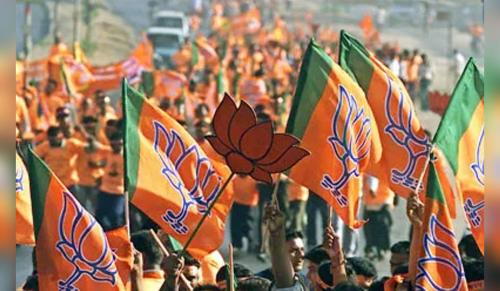
Elections are won booth by booth, not stage by stage. The BJP’s organisational machinery, funding strength, and data-driven campaign overwhelmed the Sena (UBT) and MNS.
Years of legal battles over symbols and leadership had weakened Sena (UBT) at the grassroots. The MNS, meanwhile, lacked both momentum and structure. Against a disciplined and resource-rich BJP, the Thackeray combine simply could not match the scale or speed of the campaign.
A Turning Point for Mumbai Politics
The final numbers underline a major shift. The BJP emerged as the single largest party, while Sena (UBT) followed behind. The Shinde-led Sena and MNS played secondary roles.
The 2026 BMC verdict signals a new political reality: the Thackeray name still commands respect, but it no longer guarantees power. Mumbai’s voters have made it clear—they want performance, clarity, and delivery, not just history.
For the Thackeray brothers, this election was not just a loss of seats. It was a warning that brand politics without renewal has an expiry date.