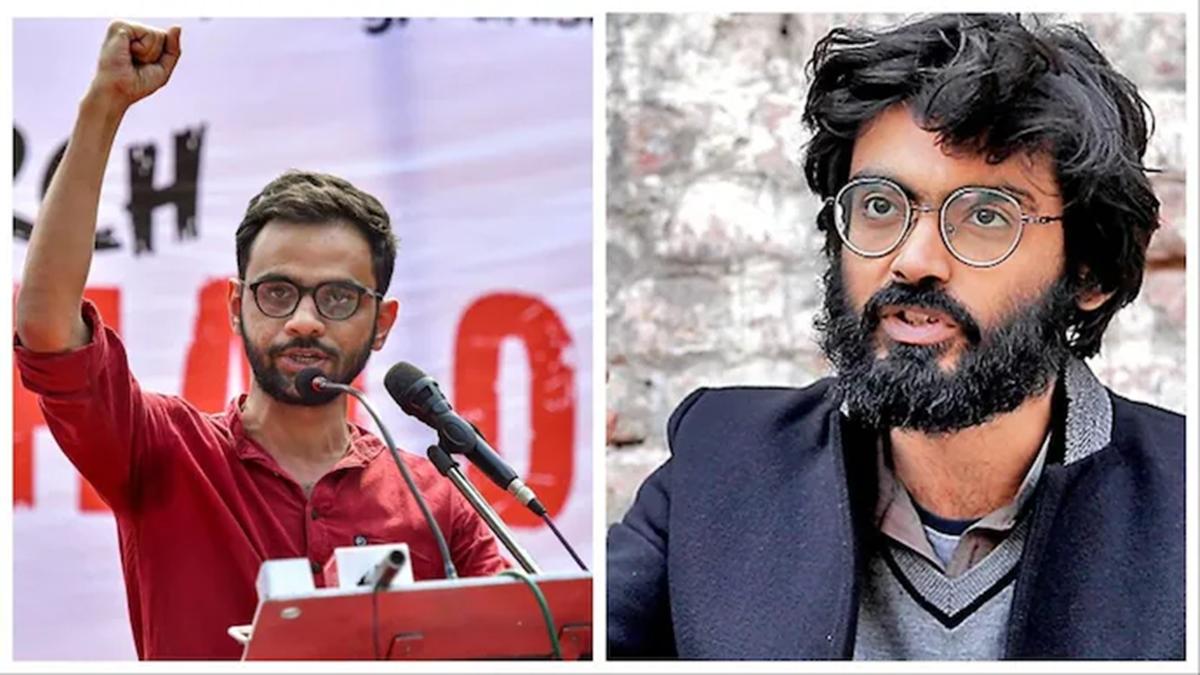
The Delhi High Court on Tuesday rejected the bail pleas of nine individuals accused in the so-called “larger conspiracy” case linked to the 2020 north-east Delhi riots. The bench of Justices Navin Chawla and Shalinder Kaur dismissed appeals from Umar Khalid, Sharjeel Imam, Athar Khan, Abdul Khalid Saifi, Mohd Saleem Khan, Shifa-ur-Rehman, Meeran Haider, Gulfisha Fatima, and Shadab Ahmed, all of whom have been in custody since early 2020.
The trial is still at the stage of framing charges, meaning a final verdict is likely some time away. Their detention will continue unless the Supreme Court intervenes.
What Is the Case About?
Authorities allege that the accused were part of a wider conspiracy to commit terrorist acts by organising protests against the Citizenship (Amendment) Act (CAA) in 2019–20, which escalated into riots.
According to the police:
Protest sites were set up across Delhi.
Students and local residents were mobilised.
Pamphlets were circulated in Muslim-majority areas.
Speeches were delivered across India to incite unrest.
Funds were raised, and materials such as stones and sticks were stockpiled.
The FIR charges the accused with offences including: conspiracy to commit terrorist acts, rioting, incitement, raising funds, attacking government officials, and damaging public property. These fall under the Unlawful Activities (Prevention) Act (UAPA), Indian Penal Code (IPC), Arms Act, and Public Property Act.
Why Was Bail Denied?
The court held that each accused played a specific role in the conspiracy, and at the bail stage, it cannot delve deeply into the merits of the evidence.
Section 43D(5) of UAPA restricts bail: courts cannot release accused if there are reasonable grounds to believe the charges are prima facie true. The bench also cited the possibility of witness tampering and stressed that long custody alone is not grounds for bail in UAPA cases.
The investigation is considered complex, producing over 3,000 pages of charge sheets, 30,000 pages of electronic evidence, four supplementary charge sheets, and 58 witnesses to be examined.
Specific Findings Against the Accused
Sharjeel Imam and Umar Khalid: Their speeches and mobilisation efforts were deemed “prima facie grave.” The court rejected claims that Imam’s January 2020 arrest excluded his involvement in February riots, noting that “initial planning and incitement” occurred earlier.
Athar Khan, Shadab Ahmed, Abdul Khalid Saifi, Mohd Saleem Khan: Defence argued their presence in WhatsApp groups and riot-affected areas was incidental. The court countered that they actively participated in meetings and helped set up protest sites in Khureji, Chand Bagh, Karawal Nagar, Kardam Nagar, and Nizamuddin.
Shifa-ur-Rehman and Meeran Haider: Linked to Jamia Millia Islamia Alumni Association, they allegedly raised funds and used alumni networks to support protest sites. Call records placed them at protest locations and AAJMI offices.
Gulfisha Fatima: Accused of guiding protest sites at Seelampur–Jaffrabad and mobilising through the Pinjra Tod campaign, her participation in even part of the conspiracy was considered sufficient to attract liability.
Earlier Bail Orders and Parity Arguments
The defence cited Natasha Narwal, Devangana Kalita, and Asif Iqbal Tanha, who secured bail in 2021. The court rejected this, emphasizing that Imam and Khalid’s roles were prima facie more serious due to their speeches. It also noted that the previous bail order was challenged in the Supreme Court and could not serve as binding precedent.
The court acknowledged the constitutional right to peaceful protest but emphasized that it does not extend to conspiratorial violence.
How Long Can Bail Be Denied?
The accused have already spent over five years in jail. The court held that prolonged custody alone cannot justify bail under UAPA, given the complexity of the investigation and that the trial is in early stages. The bench stressed that societal interest and safety must be balanced with individual rights.