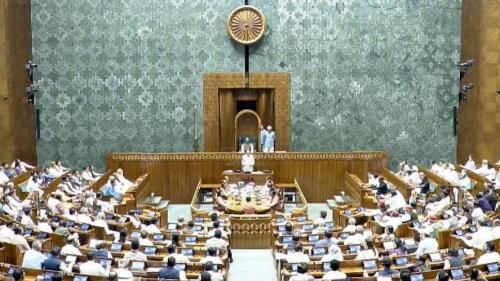
The curtains fell on the 18th Lok Sabha on Thursday as Speaker Om Birla adjourned the House sine die, ending a Monsoon session that showcased legislative productivity on paper but was repeatedly disrupted by vocal protests from opposition members over the intensive revision of Bihar’s electoral rolls. The state is slated to hold Assembly elections in November this year.
Prime Minister Narendra Modi and Defence Minister Rajnath Singh arrived at 12:04 p.m. to participate in the concluding proceedings, emphasizing the importance of the session despite persistent interruptions.
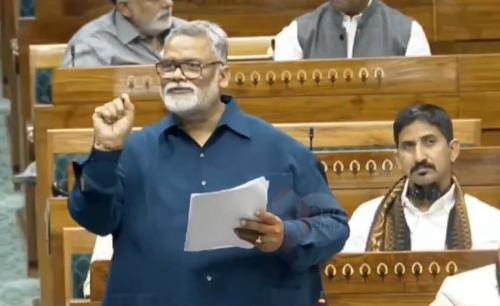
In his valedictory remarks, Speaker Om Birla expressed serious concern over the conduct of certain members, criticizing the use of placards and slogans with unparliamentary language. Members continued to shout “Vote Chor Gaddi Chhod,” flagrantly violating parliamentary decorum.
“Our conduct is being watched by the entire nation,” Speaker Birla said, urging all members to uphold the dignity of the House and preserve the values of the world’s largest democracy.
He highlighted that, as agreed in the Business Advisory Committee meeting, 120 hours had been allocated for discussion. However, due to repeated and coordinated disruptions by opposition members, only 37 hours were effectively utilized. Speaker Birla noted that 419 starred questions had been submitted, yet only 55 were answered. “This is not just a procedural failure. It is a breach of public trust,” he remarked, adding that the people of India expect accountability, not slogans.
Despite the disruptions, the session witnessed the introduction of 14 bills, with 12 successfully passed, including the Income Tax Bill, the Taxation Laws (Amendment) Bill, the National Sports Governance Bill, and the Online Gaming Regulation Bill. Meanwhile, the 130th Amendment to the Constitution Bill was referred to the Joint Parliamentary Committee for further scrutiny.
The Opposition’s insistence on a Joint Parliamentary Committee (JPC) probe into Bihar’s electoral roll revisions and other issues led to multiple walkouts and frequently stalled proceedings throughout the session.
However, the session also saw notable moments of pride and progress. A special discussion on Operation Sindoor, India’s strategic military response to the Pahalgam terror attack, was held on July 28–29, with Prime Minister Modi addressing the House. The operation was praised as a calculated and decisive counter-terror initiative, reinforcing India’s defence posture.
Equally celebrated was Group Captain Shubhanshu Shukla’s journey to the International Space Station, marking India’s significant return to space. Speaker Birla lauded the achievement, calling it “a testament to India’s scientific excellence and global leadership.”
Despite these highlights, the Speaker’s tone turned stern as he addressed the repeated violations of parliamentary decorum. “Slogans, placards, and unparliamentary language are not merely violations of decorum – they are insults to the democratic spirit,” he said. Yet, opposition members continued to shout slogans with greater intensity, ignoring appeals to restore order.
Speaker Birla emphasized that the House is not a platform for theatrics but a sacred space for serious policy discussion and debate. “Our conduct is being watched by the entire nation. We must rise to the expectations of the people,” he stated.
Earlier in the day, Speaker Birla declined to entertain multiple adjournment notices but allowed brief business, including the presentation of committee reports. Kalyan Vaijinathrao Kale tabled reports from the Standing Committee on Chemicals and Fertilisers, while Gajendra Singh Patel submitted reports from the Social Justice and Empowerment Committee for 2024–25.
Ministers from key portfolios, including Home Affairs (Nityanand Rai), Environment (Kirtivardhan Singh), Ports and Shipping (Shantanu Thakur), Road Transport (Ajay Tamta), Education (Sukanta Majumdar), and Civil Aviation (Murlidhar Mohol), also laid departmental papers before the House.
Before adjourning the session, Speaker Birla thanked Prime Minister Modi and all members who participated constructively, urging future Lok Sabha sessions to recommit to the principles of deliberation, dignity, and democratic responsibility.