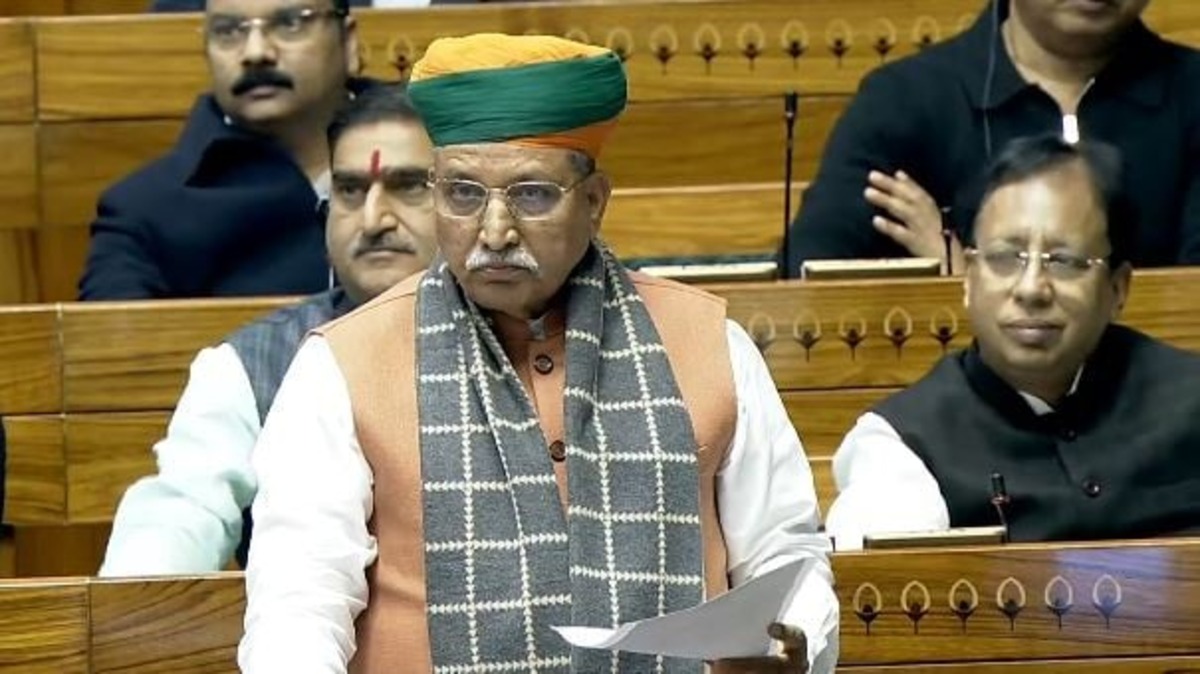
Union Law Minister Arjun Ram Meghwal introduced The Constitution (One Hundred and Twenty-Ninth Amendment) Bill, 2024, commonly referred to as the ?One Nation, One Election? Bill, in the Lok Sabha on Tuesday. The Bill seeks to facilitate simultaneous elections for the Lok Sabha, state assemblies, and Union Territories, sparking a heated debate between the ruling BJP and opposition parties.
The opposition, led by Congress, voiced strong objections, calling the Bill a direct attack on the federal structure of the Constitution. Congress MP Manish Tewari argued that the Bill goes against the basic structure doctrine, which protects the core principles of federalism and democracy. He described it as an assault on the Constitution, stating that certain aspects of the Constitution cannot be altered, even through amendments.
Samajwadi Party MP Dharmendra Yadav accused the BJP of attempting to impose ?dictatorship? in the country through the Bill, while TMC MP Kalyan Banerjee criticized it as fulfilling a single individual?s ambition rather than serving electoral reforms.
The Bill also faced resistance from the DMK and other INDIA bloc parties. DMK leader TR Baalu urged the government to send the Bill to a Joint Parliamentary Committee for detailed examination and broader consultation. Congress MP Manickam Tagore echoed this demand, reiterating the Congress party's rejection of the Bill at the introduction stage. IUML leader ET Mohammed Basheer and Shiv Sena MP Anil Desai also voiced their opposition.
Amid the uproar, the BJP, Congress, and Shiv Sena issued whips to ensure the presence of their MPs during the Bill's introduction.
Following the debate, the Union Law Minister requested that the Bill be referred to a Joint Parliamentary Committee to allow for wider discussions and consensus-building before it is put to a vote in both houses of Parliament.
The ?One Nation, One Election? proposal has been a key part of the BJP's agenda and was prominently featured in the party's manifesto for the 2024 Lok Sabha elections. Prime Minister Narendra Modi has repeatedly urged political parties to support the idea, citing the economic and administrative challenges posed by frequent elections across the country.
The plan gained momentum in September this year when the Union Cabinet approved the proposal based on the recommendations of a high-level committee chaired by former President Ram Nath Kovind. The committee?s report, submitted in March 2024, outlined the necessary constitutional amendments and procedural steps required for the implementation of simultaneous elections.
With sharp divisions emerging between the government and the opposition, the fate of the ?One Nation, One Election? Bill now hinges on the deliberations of the Joint Parliamentary Committee and whether a broader political consensus can be achieved.