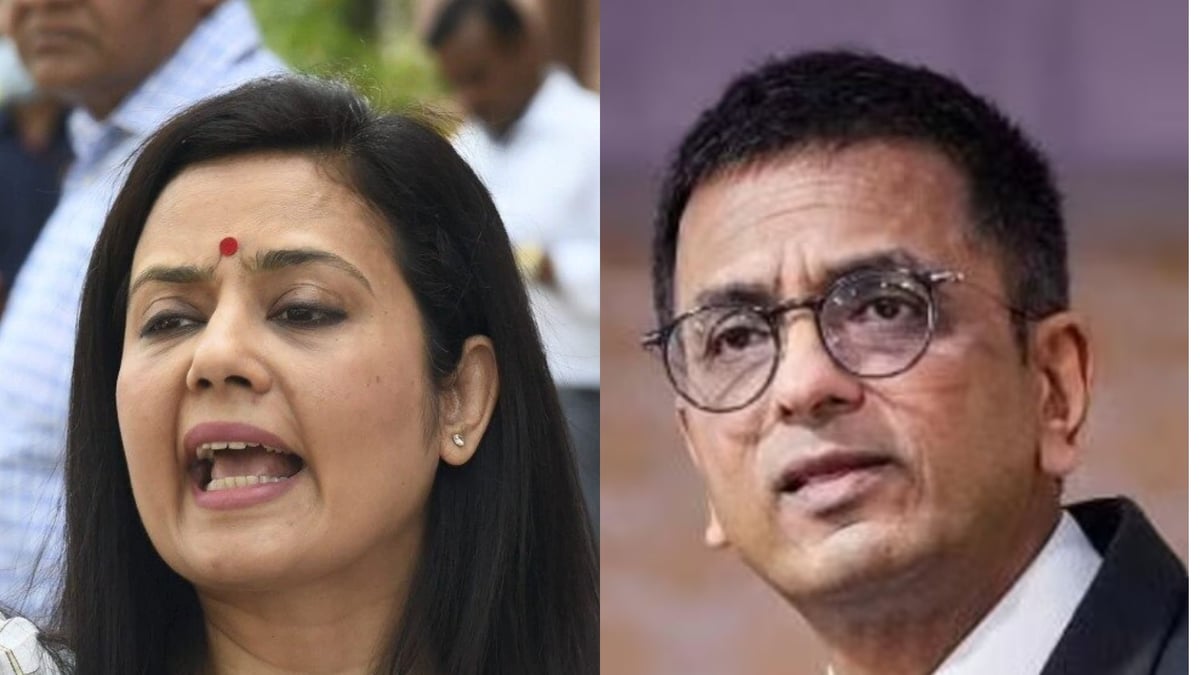
Trinamool Congress (TMC) MP Mahua Moitra launched a scathing attack on former Chief Justice of India (CJI) DY Chandrachud for his recent remarks clarifying the judiciary?s role. Chandrachud had stated that the judiciary's responsibility is to "scrutinize laws" and not act as a substitute for the Opposition in Parliament or state legislatures.
Taking to X (formerly Twitter), Moitra expressed her dissatisfaction, asserting that the judiciary must focus on upholding the Constitution. ?No, Chief Justice DYC?we didn?t expect you to do the Opposition?s job. We expected you to do your job and uphold our Constitution and laws. Not throw out the Places of Worship Act 1991 and allow every mosque to be dug up by every Sanghi judge. Shame!? she wrote.
Context of the Criticism
Moitra?s remarks came a day after an Ajmer court issued notices to the Dargah Committee, the Archaeological Survey of India (ASI), and the Ministry of Minority Affairs. The notices were based on a petition alleging the existence of a Shiva temple within the premises of the Ajmer Dargah.
Moitra?s reference to the Places of Worship Act, 1991 stems from a broader debate on the judiciary?s role in preserving secular laws amidst increasing challenges in communal matters.
Chandrachud?s Remarks
Chandrachud?s controversial comments were made during an interview with ANI, where he responded to recent statements by Rahul Gandhi, the Leader of the Opposition in Lok Sabha. Gandhi had accused the judiciary of failing to stand up to the government, suggesting the Opposition had taken over the judiciary?s responsibilities.
The former CJI clarified the judiciary?s mandate, stating, "People should not assume that the judiciary is meant to perform the role of the Opposition in legislative bodies. Our role is to scrutinize laws and ensure they align with constitutional values, not to engage in political opposition."
Political Fallout
Moitra?s response highlights a broader concern among opposition leaders about the judiciary?s perceived reluctance to challenge laws or decisions they deem unconstitutional. Her sharp critique also signals growing frustration over judicial decisions in cases like the Ayodhya verdict and ongoing disputes over places of worship.
Opposition's Expectations
Critics of Chandrachud?s stance argue that the judiciary must act as a check on majoritarian excesses, ensuring the protection of constitutional rights and secularism. Opposition leaders, including Moitra, believe the judiciary has a crucial role in safeguarding democracy, especially in times when they perceive legislative opposition to be underrepresented.
As the debate intensifies, Chandrachud?s remarks have reignited discussions on the balance of power between the judiciary and the political system in India, reflecting deeper concerns about the state of constitutional governance.