India has strongly pushed back against US President Donald Trump’s claims of mediating a ceasefire between India and Pakistan following the recent hostilities triggered by the Pahalgam terror attack. New Delhi firmly reiterated its longstanding policy that all issues with Pakistan, including those concerning Jammu and Kashmir, are to be resolved bilaterally—without external intervention.
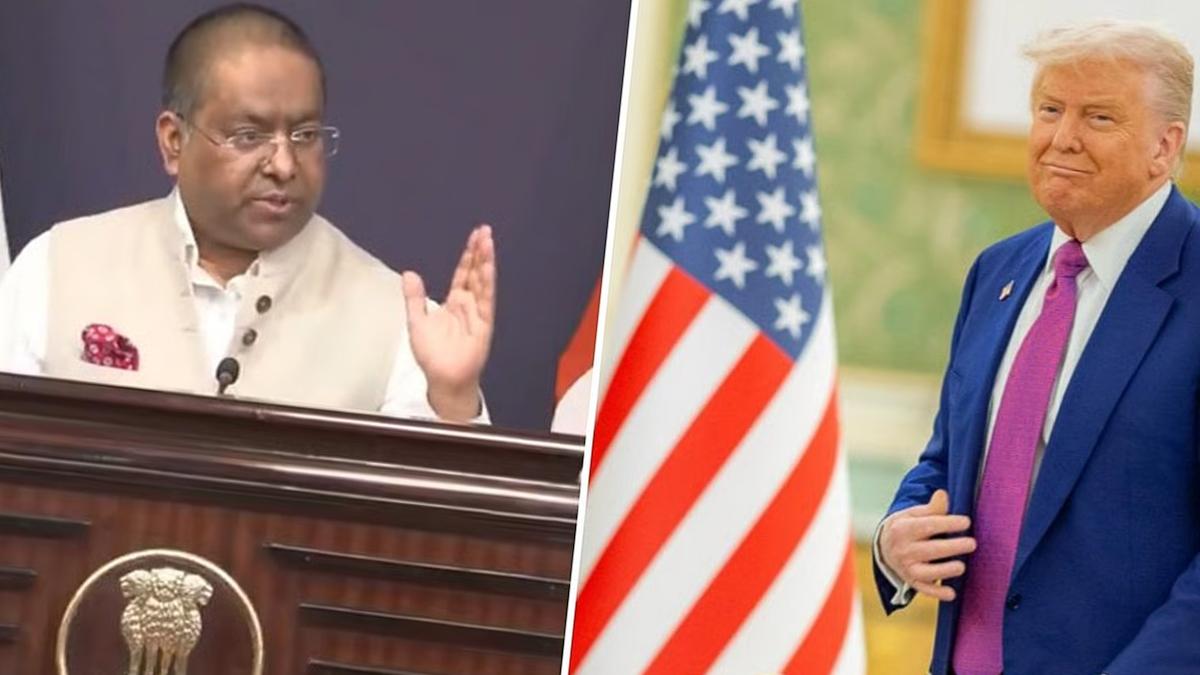
At a media briefing on Tuesday, Ministry of External Affairs (MEA) spokesperson Randhir Jaiswal dismissed suggestions that Washington brokered peace between the two nuclear-armed neighbours. “India has a longstanding and consistent position that matters relating to Jammu and Kashmir will only be addressed bilaterally between India and Pakistan,” Jaiswal said. “That policy has not changed.”
Reacting to Trump’s social media claim on May 11—where the US president said his administration had helped India and Pakistan reach a “historic and heroic decision” to end their military conflict—Jaiswal clarified that the ceasefire agreement was the outcome of a direct conversation between the two countries' Directors General of Military Operations (DGMOs) on May 10.
“Let me be clear. It was the force of Indian arms that compelled Pakistan to stop its firing,” said Jaiswal, highlighting the decisive military action taken by India during Operation Sindoor. “India’s armed forces conducted precise and effective strikes on terror infrastructure and key military installations across the border. These actions, not any external mediation, were what led to the cessation of hostilities.”
The MEA also rebuffed Trump’s dramatic claim that he helped prevent a potential nuclear war. “India’s response was entirely within the conventional domain,” Jaiswal said. “We do not subscribe to nuclear blackmail. India will never allow cross-border terrorism to be shielded by such rhetoric.”
Trump further claimed that he threatened to cut trade ties with both India and Pakistan to force a ceasefire. However, Jaiswal clarified that “the issue of trade did not come up in any discussions” between Indian and US officials during the crisis.
India had made it clear to the international community that it would respond decisively to the Pahalgam terror attack on April 22. “Our message to friendly nations was simple and consistent: we will strike at terror camps. If Pakistan escalates, we will respond in kind. If they stop, so will we,” Jaiswal said.
Operation Sindoor, launched on May 7, targeted terrorist infrastructure across the Line of Control. In retaliation, Pakistan attempted to attack Indian military positions over the next three days, but India responded forcefully—crippling several Pakistani air bases, radar sites, and command centres.
Foreign Secretary Vikram Misri later confirmed that both countries agreed to a full cessation of military activity across land, air, and sea starting May 10.
In a significant development, Jaiswal also announced that India will suspend the Indus Waters Treaty until Pakistan verifiably ends its support for terrorism. “Pakistan has nurtured terrorism on an industrial scale,” he said. “The infrastructure we targeted was responsible for deaths not only of Indians but also innocent civilians around the world.”