A sharp political clash erupted in the capital on Tuesday after Aam Aadmi Party (AAP) national convenor Arvind Kejriwal accused Delhi Chief Minister Rekha Gupta of “scientifically absurd” claims on pollution measurement and alleged deliberate attempts to mask the city’s worsening air quality.
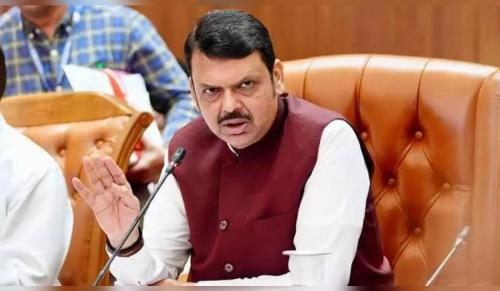
Kejriwal’s remarks came a day after Gupta, speaking at the Hindustan Times Leadership Summit 2025, compared the Air Quality Index (AQI) to temperature readings and defended the administration’s practice of spraying water around pollution hotspots. Gupta said AQI monitors “only show levels” just like temperature indicators, and therefore spraying water was a necessary intervention to bring readings down.
Her comments immediately provoked a sharp response from the former Delhi Chief Minister. Taking to X, Kejriwal wrote that Gupta’s statement was a clear admission that the government was manipulating AQI data by damping areas where monitors were installed. “When did this new science come about that AQI has now become temperature?” he wrote, accusing the BJP-led government of “hiding the real condition of Delhi’s air from the people.”
Kejriwal further alleged that water spraying near monitoring stations was not a pollution-control strategy but a cosmetic measure aimed at distorting official data. “The Chief Minister has at least accepted that spraying is being done exactly where monitors are placed so that the truth doesn’t reach the public,” he claimed.
The controversy intensified as multiple videos surfaced on social media showing water tankers spraying roads near AQI monitoring installations across several high-emission zones. Opposition leaders said this was being done daily to temporarily reduce particulate readings.
Defending her comments, Gupta said the government was only acting on the urgent need to control pollution in hotspots. “A hotspot is simply an area with the highest concentration of pollutants. Spraying water or stabilising the soil is part of our immediate response mechanism,” she said, maintaining that the administration was committed to long-term pollution control.
Meanwhile, Delhi’s air quality continued to deteriorate. According to the Central Pollution Control Board (CPCB), the 24-hour average AQI on Tuesday was recorded at 314 — firmly in the ‘very poor’ category — and is expected to worsen further in the coming days.