Union Home Minister Amit Shah on Monday launched a sharp attack on Congress MP and Leader of the Opposition Rahul Gandhi, questioning the consistency of his moral position after three consecutive electoral defeats.
Recalling the 2013 incident when Rahul Gandhi had publicly rejected and torn an ordinance brought by then Prime Minister Manmohan Singh’s cabinet to shield convicted lawmakers, Shah asked why Gandhi’s stand had changed now. “Why did Rahul Ji tear up the ordinance that Manmohan Singh brought to protect Lalu Ji? If there was morality that day, then what happened now? Just because you have lost three consecutive elections? Morality standards are not connected with victory or loss in elections. They should be steady like the Sun and the Moon,” Shah said in an interview with ANI.
The ordinance in question, widely believed to benefit RJD chief Lalu Prasad Yadav following his conviction in the fodder scam, had given convicted lawmakers a three-month reprieve to retain their seats. It was later withdrawn.
Shah’s remarks came in the context of the Constitution (130th Amendment) Bill, 2025, which proposes automatic removal of the Prime Minister, Chief Ministers, and Ministers if they remain in custody for 30 consecutive days on charges punishable with five years or more in prison.
Strongly defending the Bill, Shah said it applies equally to all political parties, including the ruling BJP. “I am sure it will be passed. There will be many people in the Congress party and in the opposition who will support morality and maintain the moral ground,” he asserted.
He also pointed out that Prime Minister Narendra Modi had deliberately included his own office under the ambit of the Bill, contrasting it with the controversial 39th Amendment introduced by former Prime Minister Indira Gandhi to protect top officeholders from judicial scrutiny. “The Prime Minister himself has included the post of PM in this. Earlier, Indira Gandhi had brought the 39th amendment (of protecting the President, VP, PM, and Speaker from judicial review by Indian courts). Narendra Modi ji has brought a constitutional amendment against himself that if the Prime Minister goes to jail, he will have to resign,” Shah said.
Responding to criticism that the law could be misused against opposition-ruled states, Shah underlined that India’s judiciary would ensure fairness. “Our court also understands the seriousness of the law. When one has to resign after 30 days, then before that the court will decide whether the person should get bail or not. When the case went to the High Court, it was argued that Arvind Kejriwal should resign because he is in jail. The High Court said that we believe that he should resign on moral grounds but there is no provision in the current law,” Shah recalled.
Shah also dismissed the notion that top leaders could govern from prison. “My party believes, the Prime Minister of the country believes that no CM, Minister or PM in this country cannot run the government while being in jail. When the constitution was made, the constitution makers would not have imagined such shamelessness that any CM would go to jail and remain the CM from jail,” he said.
At the same time, Shah clarified that the law would not permanently bar leaders from returning to office. “The bill allows reinstatement after bail,” he added.
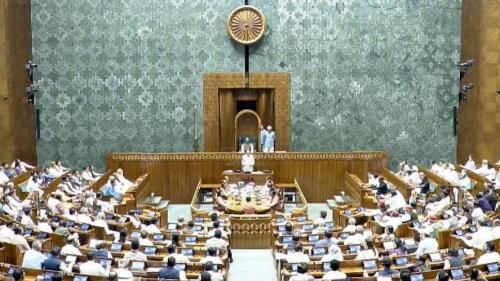
With the Joint Parliamentary Committee (JPC) currently examining the Bill, the debate has intensified over whether the amendment strengthens constitutional morality or risks becoming a political weapon.