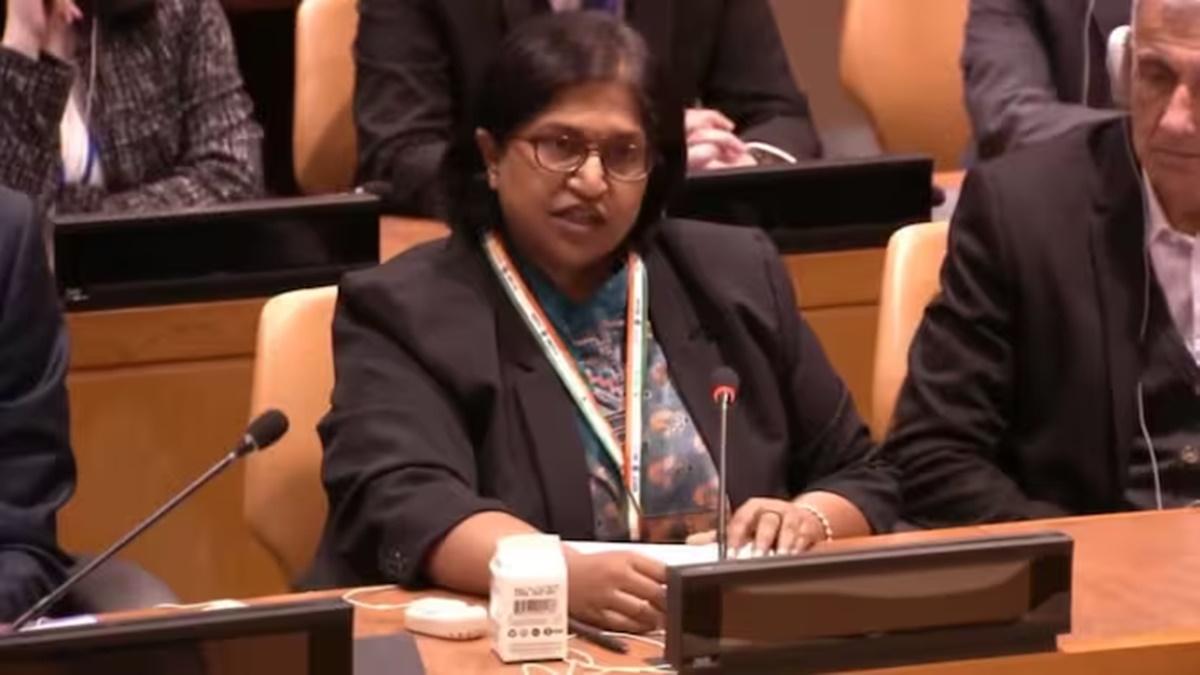
India took a firm stand at the United Nations on Monday over the recent Pahalgam terror attack that killed 26 civilians, mostly tourists, describing it as the worst assault in Kashmir since the 2019 Pulwama bombing. Addressing the global body, India’s Deputy Permanent Representative to the UN, Ambassador Yojna Patel, denounced Pakistan’s role in supporting cross-border terrorism and destabilising the region.
Speaking at the launch of the Victims of Terrorism Association Network in New York, Patel condemned terrorism “in all its forms” and accused Pakistan’s delegation of spreading propaganda and making baseless allegations. Without directly naming Pakistan in the initial remarks, she later invoked the confession of Pakistan’s own Defence Minister Khwaja Asif to expose Islamabad’s support for terrorism.
“The whole world has heard Pakistan’s Defence Minister Khwaja Asif admitting and confessing Pakistan’s history of supporting, training and funding terror organisations,” said Patel, referencing his statement in a recent television interview. “This open confession surprises no one and exposes Pakistan as a rogue state fuelling global terrorism and destabilising the region,” she added, while exercising India’s Right of Reply.
Patel also underlined India’s long-standing position as a victim of cross-border terror and urged the international community to stop ignoring Pakistan’s actions. “The world can no longer turn a blind eye,” she asserted.
The United Nations Security Council last week condemned the April 22 Pahalgam massacre “in the strongest terms.” In a press statement, the 15-member Council demanded justice and called on all nations to cooperate fully with the investigation. “They stressed that those responsible for these killings should be held accountable,” the UNSC statement read, urging member states to act in accordance with international law and relevant UN resolutions.
The Resistance Front (TRF), a proxy of Pakistan-based Lashkar-e-Taiba, initially claimed responsibility for the brutal shooting of unarmed tourists in the Baisaran meadow near Pahalgam, before retracting its statement. The assault has not only caused international outrage but also escalated diplomatic tensions between India and Pakistan.
In swift retaliation, India undertook a series of countermeasures. These included suspending the Indus Waters Treaty of 1960, halting cross-border trade through the Attari Integrated Check Post, and revoking the SAARC Visa Exemption Scheme for Pakistani nationals, giving them 40 hours to exit the country. Both nations have since scaled back diplomatic presence at their respective High Commissions.