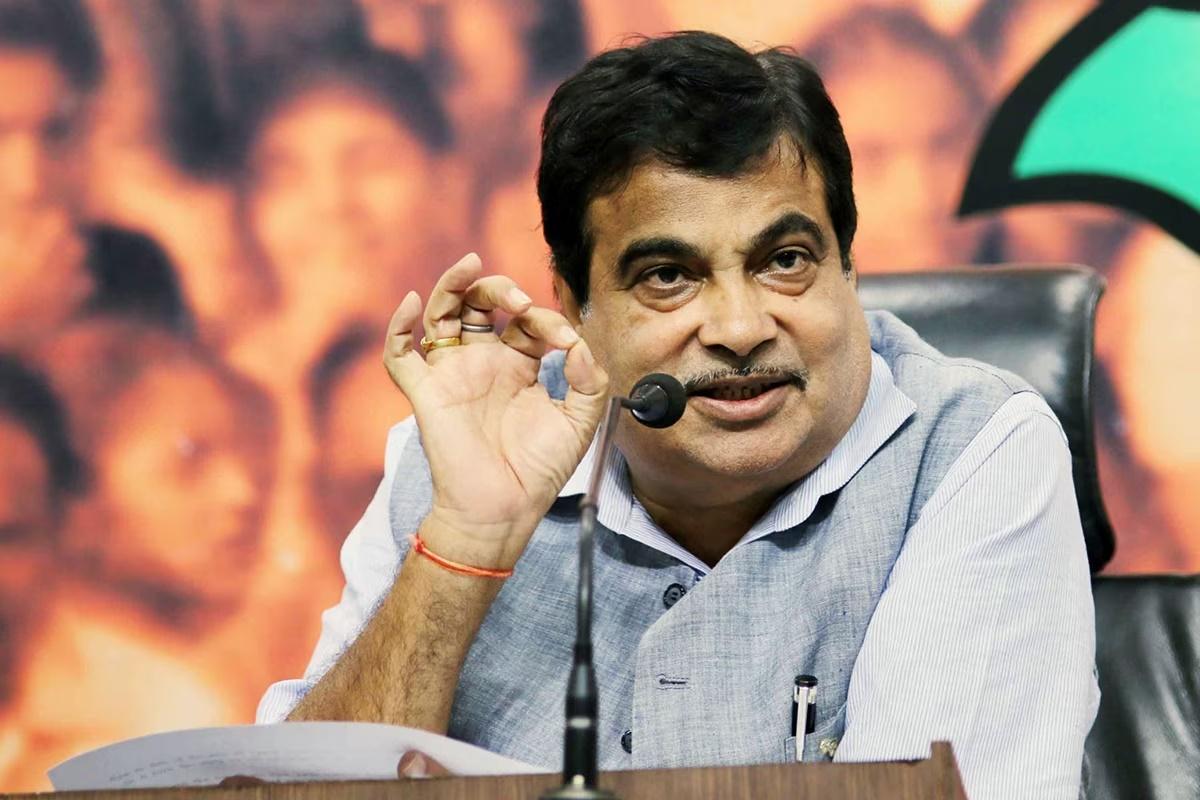
Union Minister Nitin Gadkari has long been celebrated as the man with big ideas for India’s highways and transportation sector. His speeches often brim with confident deadlines, transformative visions, and seemingly achievable goals. Yet, two of his most striking public promises—the pledge to build roads “like those in America” and the assurance that petrol prices could drop to ₹55 per litre—now stand as examples of political overreach, where the rhetoric has far outpaced the reality.
In 2022, Gadkari declared in Parliament that by 2024, India’s roads would match American standards. He spoke with the authority of a minister whose department was pouring billions into expressways, greenfield corridors, and smart highway technology. He promised drastically shorter travel times: Delhi to Chandigarh in 2.5 hours, Delhi to Mumbai in 12. He outlined the construction of 26 green expressways, with the National Highways Authority of India at the helm of a massive expansion drive. The audience heard a vision of sleek, pothole-free motorways, smooth interchanges, and seamless logistics—an infrastructure revolution in the making.
But as the months rolled on, so did the timelines. By 2023, the target shifted, first to a five-year window, then to a “vision for 2047,” before being pulled back to just “two more years” in 2025. While several high-profile projects have indeed been launched—the Nagpur–Vijayawada expressway, upgrades to the Mumbai–Pune expressway, a new network of four-lane highways in Bihar—the lived experience for most road users still tells a different story. The much-touted Delhi–Mumbai expressway, for instance, has already drawn public criticism for potholes, incomplete service facilities, and safety lapses. Even as the minister speaks of world-class roads, travellers report that India’s highways remain plagued by inconsistent construction quality and traffic bottlenecks, falling far short of the American freeways they were promised.
The petrol pledge is an equally sharp case of political optimism colliding with economic reality. Back in September 2018, Gadkari confidently said that through ethanol blending—using fuel derived from sugarcane, biomass, and waste—diesel could be sold for ₹50 and petrol for ₹55 per litre. At the time, petrol retailed for around ₹78. By 2025, however, instead of falling, the price has climbed to roughly ₹105 per litre, a stark ₹50 higher than his projection. This price rise came even though global crude oil rates have remained broadly stable, exposing the gap between the minister’s promise and what policy could actually deliver.
The ethanol blending program has indeed advanced, with E20 fuel (20% ethanol mix) being introduced in many regions. But motorists have found the benefits questionable—reduced mileage, possible long-term engine wear, and no meaningful cut in fuel bills. What was presented as a cost-saving innovation has, in practice, offered environmental credentials without any economic relief to the ordinary consumer.
At the heart of both these cases lies the same pattern: ambitious commitments made without a grounded, transparent roadmap for delivery. Road projects have suffered from delays in land acquisition, tendering, and construction quality control. The fuel pricing dream collided with India’s complex tax structure, the government’s revenue dependence on fuel excise, and the automotive industry’s slow adaptation to ethanol-compatible technology.
Gadkari remains one of the most visible faces of India’s infrastructure drive, and his department has undeniably overseen significant growth in highway length and project scale. Yet, political credibility is not measured in kilometres built but in promises kept. When a minister repeatedly shifts goalposts—whether it’s “American roads by 2024” or “petrol at ₹55”—the public begins to hear not vision, but vagueness.